
Blog & News
Designing Gates That Don’t Obstruct Century-Old Trees in Menlo Park
jay jay
Dec 26, 2025
Article, Uncategorized
For homeowners exploring gate installation in Menlo Park, there’s a special challenge that comes with living among the city’s century-old trees. These tall, beautiful trees tell stories of Menlo Park’s past and are protected by local laws. When designing menlo park gates, it takes care, creativity, and knowledge to make sure these trees stay healthy and untouched. At RNA Automatic Gates, we build tree safe gates that work beautifully while protecting Menlo Park’s natural treasures.
Heritage Matters: Understanding Tree Protection Laws in Menlo Park
Menlo Park has strict rules that protect old and historic trees. These laws, known as heritage tree laws, make sure big and special trees are safe from harm. If a tree’s trunk is at least 15 inches wide, measured about four feet above the ground, it is considered a “heritage tree.”
Before you do any construction, including putting up a gate or fence, you need to check whether your property has one of these protected trees. If it does, you must get permission from the city before doing any work near it. Cutting, trimming, or even digging close to the roots without permission can result in big fines and, more importantly, damage a tree that could be over 100 years old.
Working with professionals who understand these rules makes things easier. RNA Automatic Gates works closely with arborists and city inspectors to make sure every gate project respects the tree laws. The goal is to build gates that fit perfectly while keeping each heritage tree strong and safe.
Surveying Root Zones Before Gate Planning
Before installing a gate, it’s smart to study what’s happening underground. Tree roots can stretch much farther than people expect. Some roots reach two or three times wider than the tree’s branches. These roots feed the tree and keep it standing. If digging or drilling happens too close, it can hurt the roots and make the tree weak or sick.
This is why root zone planning is so important. A professional arborist can help find out where the main roots are and create a map that shows the “no-go” areas. This map is called the Critical Root Zone (CRZ). Once you know where the roots are, gate installers can plan how to build around them instead of through them.
RNA Automatic Gates always checks these zones before starting work. If a post hole is too close to a root, the design can be adjusted. With the right planning, a strong gate and a healthy tree can share the same space peacefully.
Gate Placement Techniques That Respect Canopy Spread
When designing eco sensitive gates, where you place the gate makes a big difference. The goal is to give the tree plenty of breathing room, both above and below the ground.
- Offset placement helps when branches are too close. Moving the gate slightly to one side can keep it clear of the canopy.
- Custom widths let you fit the gate naturally between tree trunks or roots without cutting or trimming anything.
- Shorter posts or lower hardware can make the gate blend into the space under the branches.
Each design choice helps the tree stay undisturbed while the gate functions smoothly. A good placement means you won’t need to prune or cut back branches year after year.

Floating Foundations: Engineering Around Tree Roots
Traditional gates use deep concrete posts for support. But for areas with old trees, that method can be harmful because it means digging into root zones. A better way is to use a floating gate base.
Floating foundations sit lightly on the surface or use shallow footings. This design spreads the gate’s weight across a larger area without cutting into deep soil. It’s safe for roots and works well even when the ground is uneven or filled with tree roots.
This type of base is also easier to repair or adjust later. If the soil moves or roots grow larger over time, the foundation can shift slightly without cracking or breaking. RNA Automatic Gates often uses this method for menlo park gates near protected trees. It’s gentle on nature but still sturdy enough for daily use.
Material Choice for Flexible Tree-Safe Installs
Choosing the right materials can make a big difference when installing tree safe gates. Heavy materials like solid steel can put pressure on roots if they’re not anchored deep in the ground. Lightweight and flexible materials are a better choice for these delicate projects.
- Aluminum is light and strong, and it doesn’t rust easily. It’s perfect for areas that need careful handling.
- Composite materials can look like wood or metal but are lighter and need less digging for installation.
- Blended timber or treated wood brings a natural gate design that matches the beauty of old trees.
Using the right material helps balance function and protection. The goal is to create a gate that lasts without harming what’s living around it.
Natural Aesthetic Pairings with Historic Trees
When your property has a huge oak or redwood, the gate should look like it belongs there. Natural gate design is about blending modern craftsmanship with the calm beauty of old trees.
Some design ideas include:
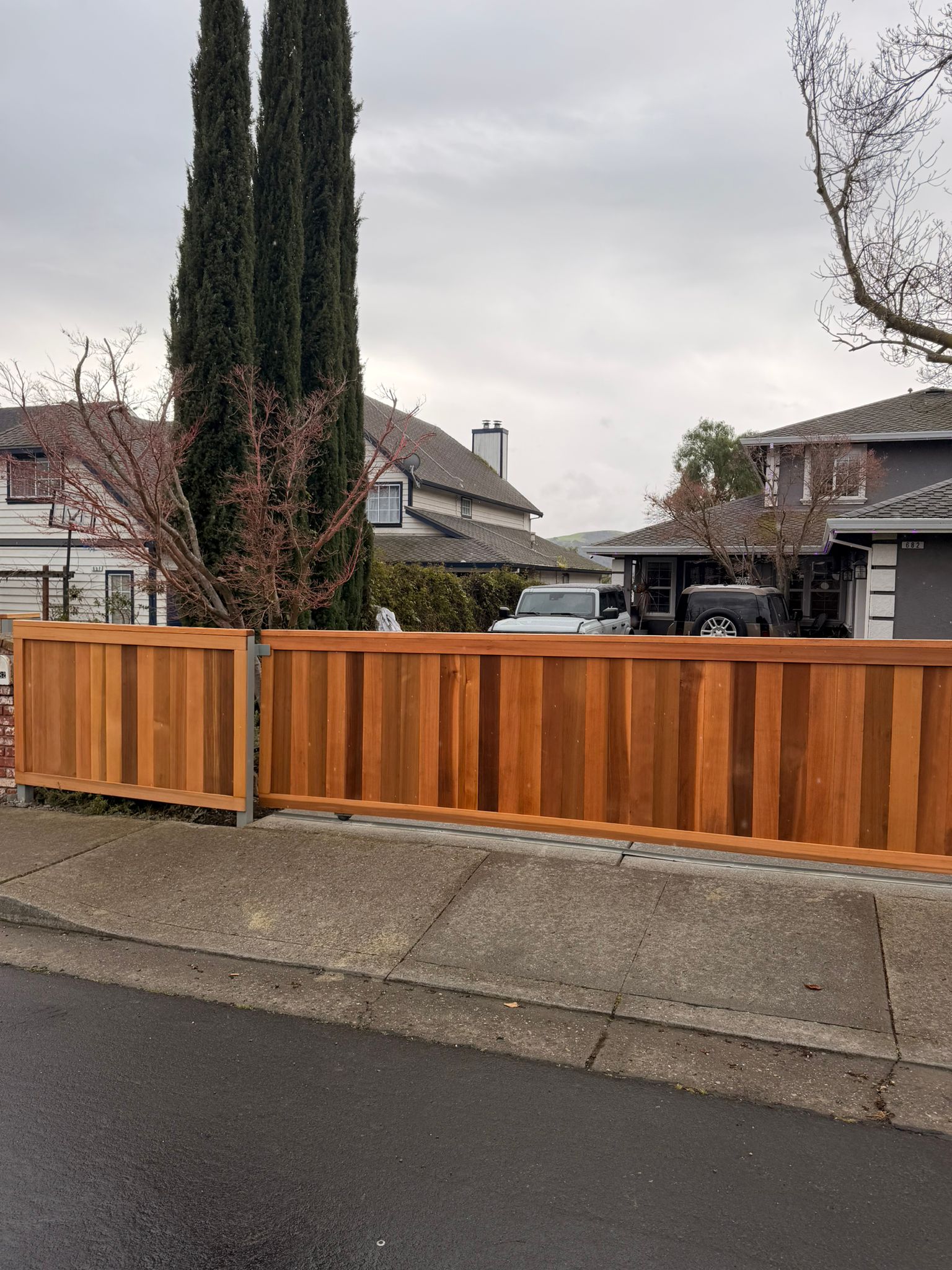
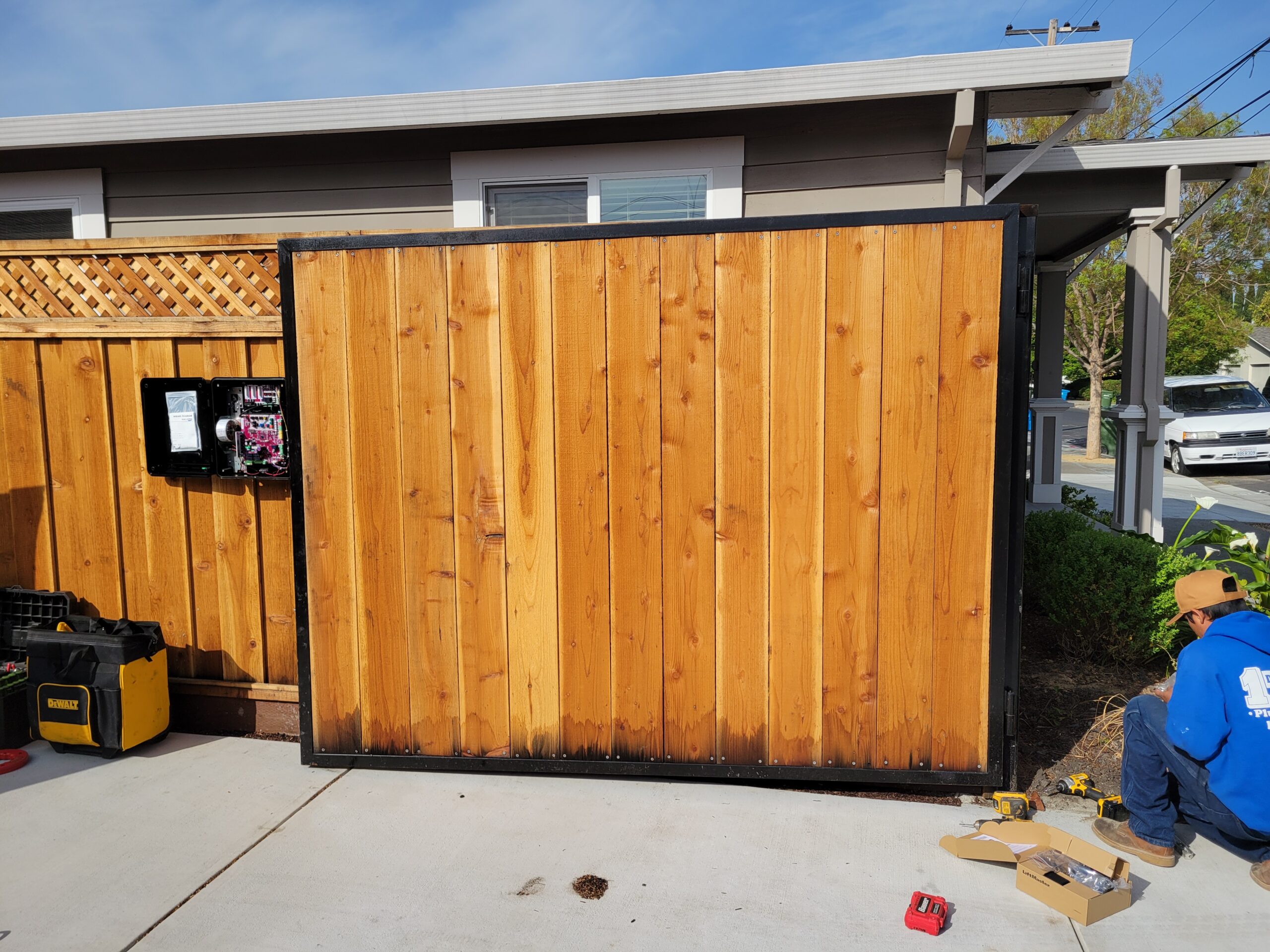
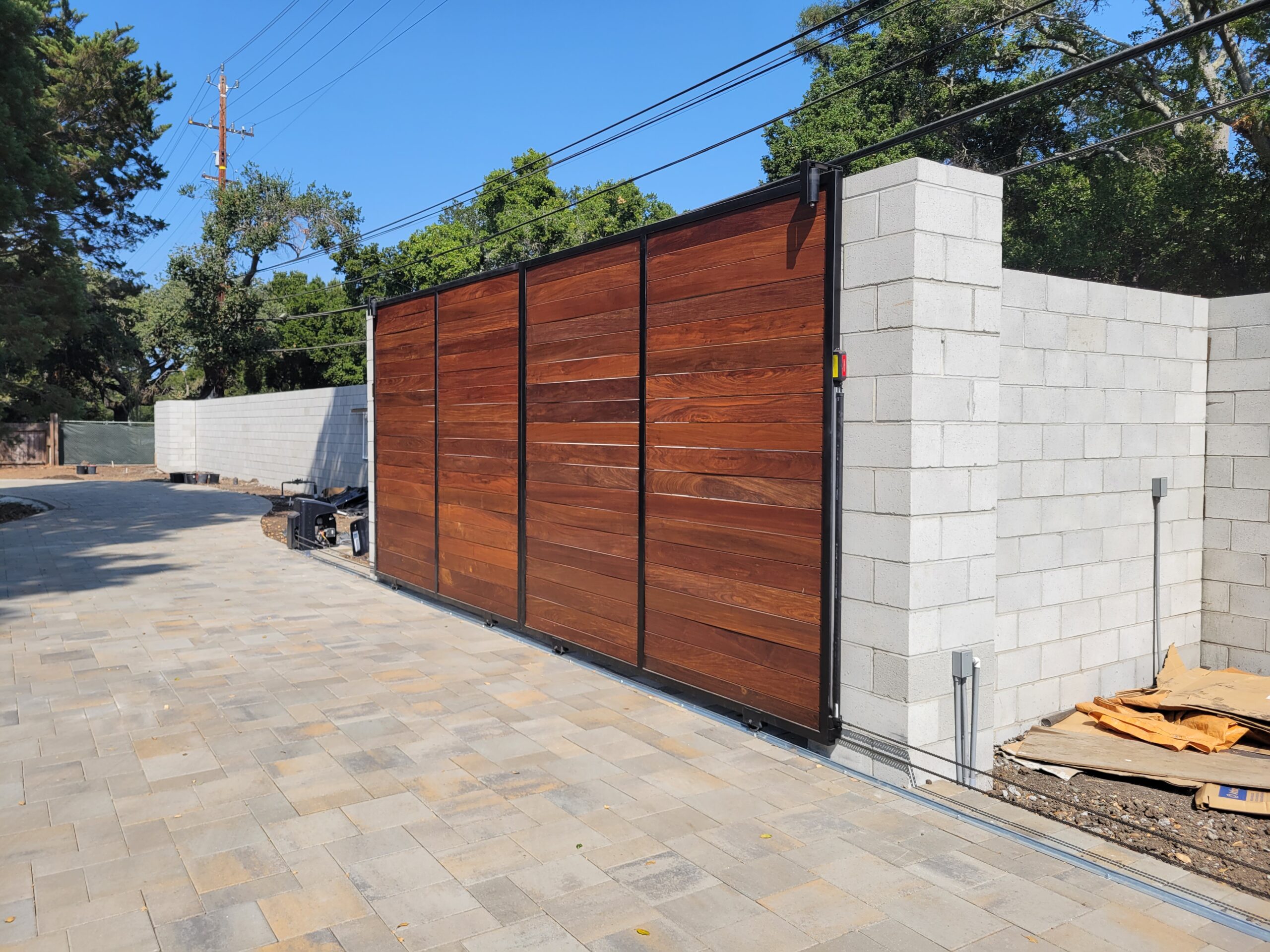
- Wooden panels with black iron frames that bring warmth and timeless style.
- Horizontal cedar boards that mirror the natural lines of the landscape.
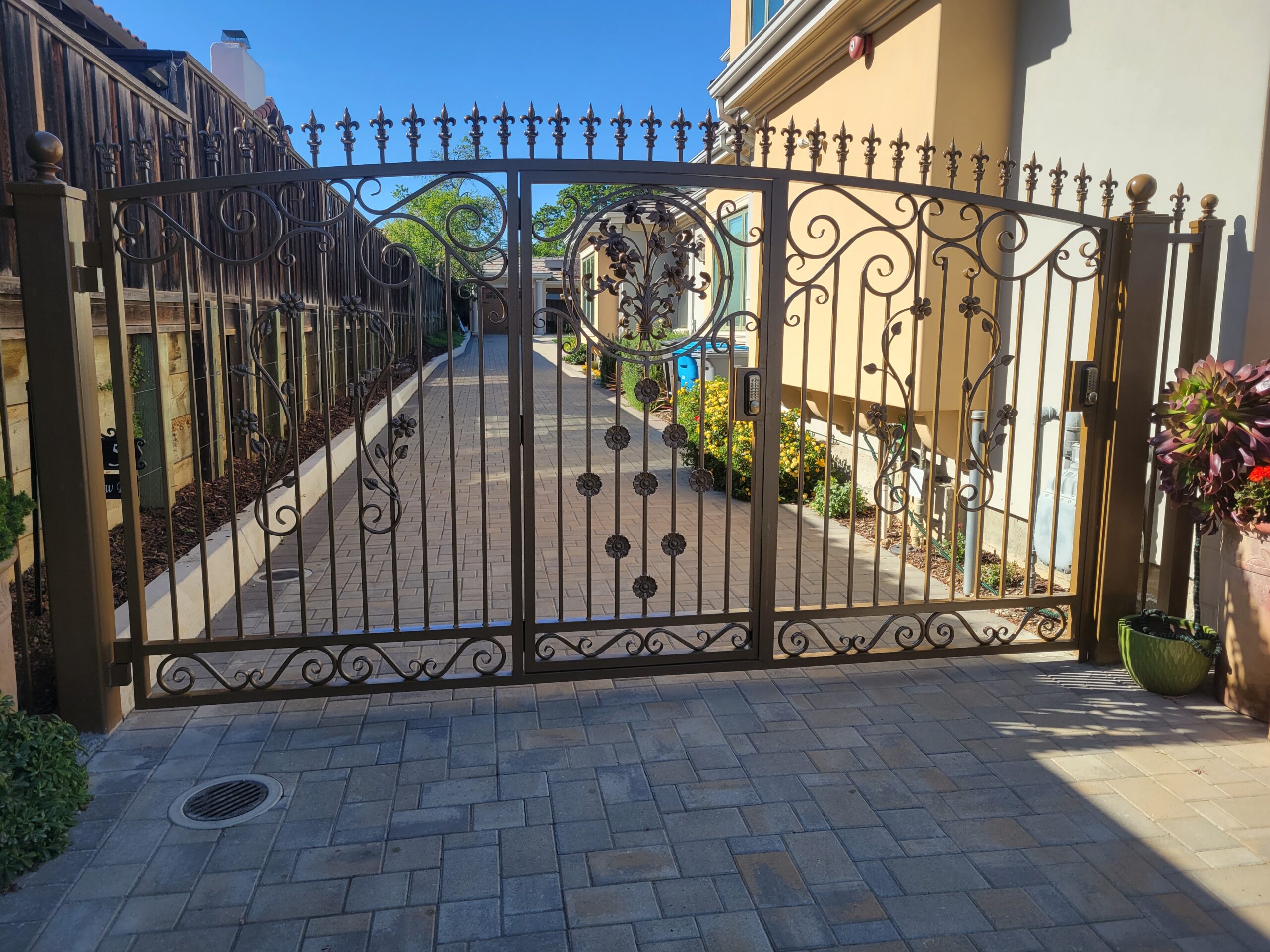
- Metal gates with cut-out leaf or vine patterns that echo the shape of nearby branches.
These designs help the gate become part of the scene instead of standing out awkwardly. Menlo Park’s tree-lined streets deserve gates that honor that natural rhythm.
Looking for Affordable Garage & Gate Repairs?
We offer quality service at competitive rates. Call (650) 912-1200 today to schedule your repair.
Smart Access Without Trenching: Wireless Gate Tech
Running power cables underground can be risky near tree roots. The digging can cause long-term damage. That’s why wireless gate system technology is such a great option for historic tree property owners.
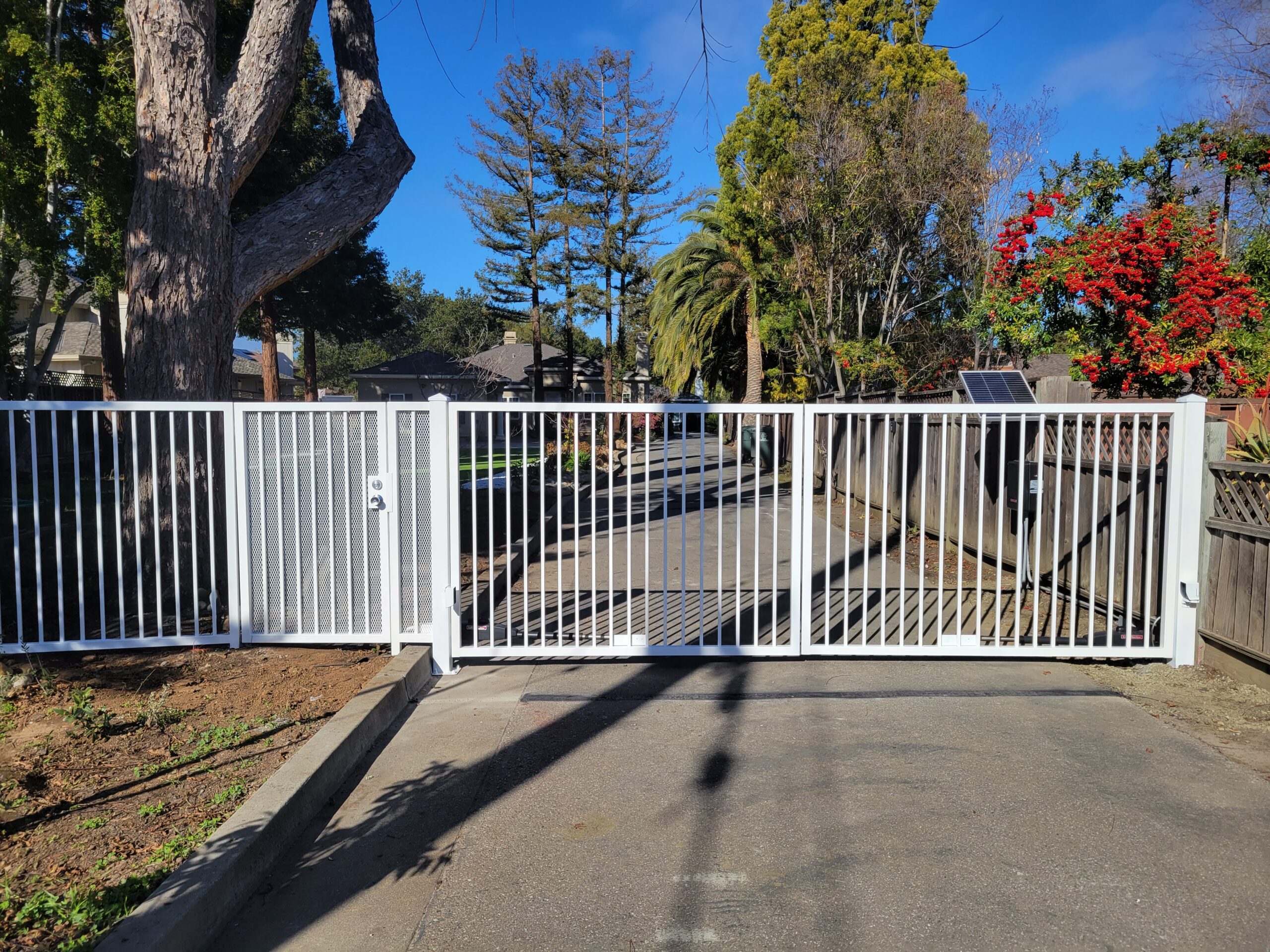
Wireless systems remove the need for trenching. Instead, the gate operates using wireless signals and solar power. It’s simple, clean, and environmentally friendly. You can control your gate from a remote, keypad, or smartphone app without touching a single root.
This approach fits perfectly with eco sensitive gates because it gives you modern convenience while keeping the environment safe.
Case for Hingeless Sliding Gates in Root-Dense Zones
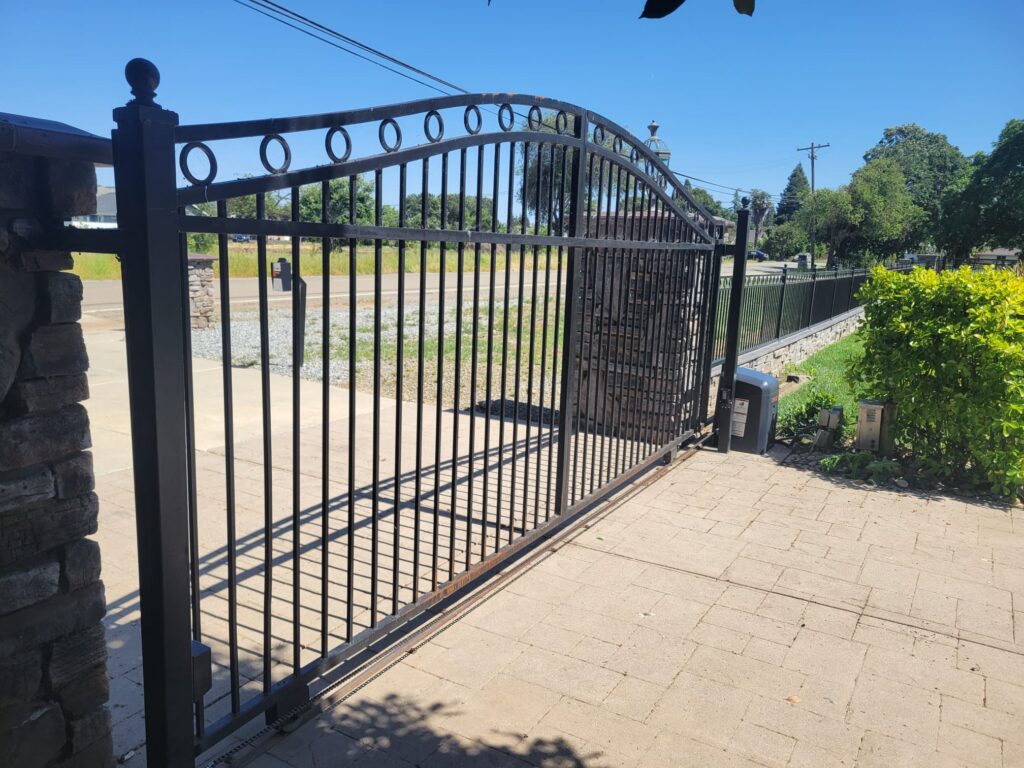
In areas where the ground is full of roots, a sliding gate install is often better than a swinging one. Swing gates need deep posts and wide spaces to open. That can mean digging near roots or cutting branches. Sliding gates don’t have that problem.
A sliding gate moves sideways along a track or, in some cases, glides above the ground on rollers. Because the movement is horizontal, there’s no need for deep hinge posts or wide swinging areas. It’s smoother, safer for roots, and perfect for tight driveways with big trees nearby.
Sliding systems can also look sleek and modern. When paired with a floating gate base, they create a strong but gentle solution for heritage properties.
Avoiding Heat Damage: Gates and Tree Proximity in Summer Months
Menlo Park summers can get hot, and metal gates can reflect sunlight toward nearby trees. That reflection can heat up the bark and leaves, especially for younger or thinner trees, causing dryness or sunburn-like damage.
To prevent that:
- Choose matte or non-reflective paint finishes for metal gates.
- Use wood inserts or shaded panels to block harsh sunlight.
- Angle shiny surfaces so they reflect light away from trees.
These small design changes help keep trees healthy through the hottest months. The same changes also protect the gate itself from fading or overheating.
Custom Fabrication for Uneven or Sloped Tree Areas
Not every yard in Menlo Park is flat. Some trees grow on slopes, and the ground can be bumpy or irregular. Installing a gate in these conditions takes skill and custom fabrication.
At RNA Automatic Gates, we can shape the gate frame to match the land. Posts can be adjusted to fit uneven levels, and panels can be sized differently to create a smooth top line even when the ground isn’t even.
This custom approach means you don’t have to dig deep or remove soil near roots. You get a gate that looks natural and works properly, even in tricky spaces.
Long-Term Maintenance Without Tree Interference
In tree-heavy properties, loop and safety sensor systems require special attention because natural growth, moisture, and soil movement can affect their performance over time. Proper sensor selection and placement help gates operate safely without disturbing protected trees.
Exit loop sensors are typically embedded in the driveway to detect vehicles leaving the property. In Menlo Park homes with heritage trees, exit loops must be positioned outside the Critical Root Zone whenever possible. Shallow-cut or saw-cut loop installation methods are often used to avoid damaging major roots while still providing reliable vehicle detection.
Safety loop sensors monitor the gate’s active travel area. If a vehicle or object is detected, the gate stops or reverses automatically. These loops are especially important for sliding gates in root-dense zones, where ground movement may occur as trees continue to grow.
Edge sensors (safety edges) are mounted along the leading edge of the gate. If the gate contacts an object, the sensor triggers an immediate stop or reversal. Edge sensors are ideal for tree-adjacent installations because they add protection without requiring any trenching or soil disruption.
Photo eye sensors use infrared beams to detect obstructions in the gate opening. Leaves, branches, or seasonal debris can occasionally interrupt the beam, so careful alignment and regular cleaning are essential in wooded environments. Photo eyes are required by modern safety standards and are fully compatible with eco sensitive gate designs.
Common Sensor Issues and Troubleshooting Near Trees
- Gate reverses unexpectedly
- Often caused by falling leaves or branches breaking the photo eye beam. Clearing debris and realigning the sensor usually resolves the issue.
- Gate does not open automatically when exiting
- This may indicate a damaged or displaced exit loop due to root growth or soil shift. Loop testing and repositioning outside the root zone may be required.
- Intermittent stopping during operation
- Safety loops may be detecting uneven ground movement. Sensitivity adjustment helps restore smooth motion.
- False triggers after rain or irrigation
- Moisture intrusion around loop wiring can cause false readings. Proper sealing and waterproof conduit prevent repeat problems.
- Delayed response or jerky motion
- This can occur when older control boards struggle to communicate with modern sensors. In these cases, a partial system upgrade improves reliability without disturbing tree roots.
By maintaining properly configured loop and sensor systems, homeowners can ensure their gates remain safe, quiet, and responsive while continuing to protect Menlo Park’s century-old trees.
Frequently Asked Questions (FAQ)



Frequently Asked Questions (FAQ)
Can I install a gate if a heritage tree is close to my driveway?
Yes, you can. It just takes thoughtful planning. Using floating foundations, sliding gates, and non-invasive systems can make it possible without harming the tree.
How do I power an automatic gate without digging?
A wireless gate system or solar-powered setup is ideal. Both options remove the need for underground cables that could damage roots.
How far do tree roots really go?
Lorem consectetur adipiscing elit. Lorem Lorem Lorem Lorem gravida scelerisque nibh ac. Lorem Lorem Lorem Lorem et elit tincidunt, scelerisque est in, rutrum dui. Lorem feugiat tellus. Mauris sapien massa, ultricies Lorem Lorem varius diam et eleifend fringilla. Suspendisse efficitur quis Lorem Lorem Lorem Lorem Lorem pharetra varius justo. Curabitur varius Lorem Lorem Lorem Lorem Lorem Lorem Lorem Lorem Lorem Lorem Lorem Lorem Lorem Lorem Lorem Lorem Lorem Lorem Lorem Lorem
What kind of gate design looks best near old trees?
A natural gate design with wood, iron, or composite materials works best. These designs match the surrounding landscape instead of clashing with it.
Which is better for tree-heavy areas, a swing gate or sliding gate?
A sliding gate install usually causes less disruption because it glides along the surface rather than swinging through the air.
RNA Automatic Gates builds tree safe gates that keep Menlo Park’s history alive while bringing modern comfort to your home. Whether it’s a wireless gate system, eco sensitive gates, or a design tailored for a historic tree property, our team will create something that works beautifully without disturbing nature.
Our promise is simple: to keep your trees standing tall while your gates open smoothly.
